Plant Contemplation and the End of Contemplation

Roger Deakin
Wildwood: A Journey Through Trees
“The Bluebell Picnic”

On the art and garden of John Nash

Quite why so many woodland plants are poisonous is an interesting question, but the bluebell is one of them. The sleep of Endymion is for ever. As a wood engraver, John Nash’s botanical triumph is the celebrated Poisonous Plants, Deadly, Dangerous and Suspect, published in 1927. In a review of an edition of Nash woodcuts in Hortus in 1988, Ronald Blythe writes:

His garden was always plentifully supplied with henbane, hemlock, monk’s hood, foxglove, meadow saffron, spurge laurel, datura, caper spurge, herb Paris, Helleborus foetus and other such species which he had often been found staring at, much as one might at a murderer. He was proud, not only of their robust growth, but of their capabilities, and I have often watched him cast a wary eye over the gaunt reaches of the henbane. Gardens were not entirely benign places to him; they contained their darker moments.

The note captured in the past tense almost makes the poison homeopathic. One wonders if such places still exist (they do). I can attest to aconite in our garden and bear’s foot hellebore but no yew.

And so for day 2551
07.12.2013
Posted in Gardens | Tagged | Leave a comment

Benevolence is the Soul of Art

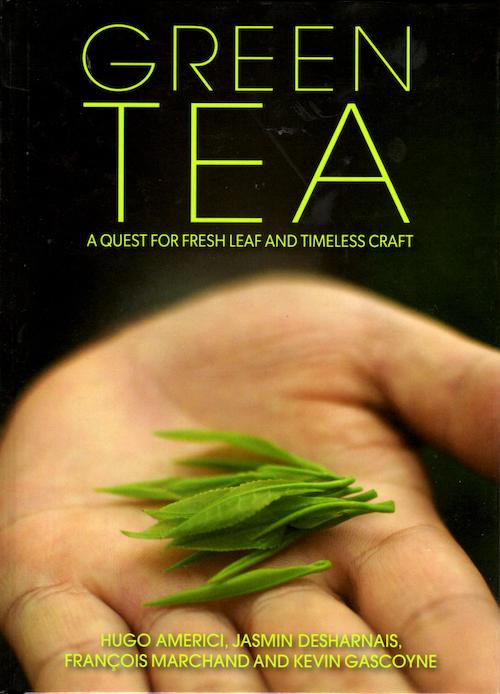
Green Tea: A Quest for Fresh Leaf and Timeless Craft. Hugo Americi et al.

The open hand on the depicted on the cover of this book reverberates with this response to the question about the qualities of a good potter from an interview with Mr. Yen Wei En, a potter from Longquan.

A good potter must have good technical skills. he must also know philosophy, aesthetics, history, culture, and traditional ceramics. The Chinese greatly respect artisans that possess knowledge and virtue, for benevolence is the soul of art. In my view, morality and know-how are important qualities for a potter.

Hugo America - Green Tea - Cover

And so for day 2550
06.12.2013

Posted in Uncategorized | Leave a comment

Shadow Dawn

It was the voice that led me to uncover more about the lyrics. They are read by Tilda Swinton.

“How enduring, how we need durability
The sky before sunrise is soaked with light
Rosy colour tints buildings, bridges, and the Seine
I was here when she with whom I walk wasn’t born yet
And the cities on a distant plain stood intact
Before they rose in the air with the dust of sepulchral brick
And the people who lived there didn’t know
Only this moment, at dawn, is real to me
The bygone lives are like my own past life, uncertain
I cast a spell on the city, asking it to last.”

It’s the whole poem “At Dawn” in Czesław Miłosz’s collected in Unattainable Earth
which forms the opening of “Shadow Journal” by Max Richter.

And with more research, we learn that the song belongs to a protest album (against the 2003 Iraq War).

https://www.theguardian.com/commentisfree/2016/jul/08/iraq-war-tony-blair-creativity-chilcot-inquiry

In my own listening, I thought that the quoting of the poem was an extract. It turns out that it is the whole thing. It still juts out in memory as a fragment. Such is the distance between hearing and seeing: for the ear a spell is cast whose outcome is uncertain and for the eye the poem on the page is stilled, collected, enclosed.

And so for day 2549
05.12.2013

Posted in Perception, Poetry | Leave a comment

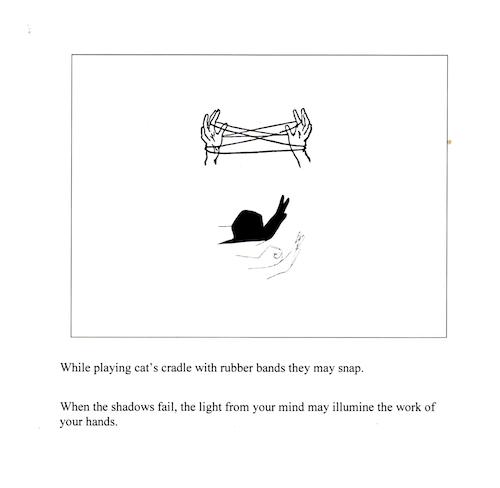
Zen Hand Games

Zen Hand Games

SHADOW

When the shadows fail, the light from your mind may illumine the work of your hands.

ELASTICITY

While playing cat’s cradle with rubber bands they may snap.

And so for day 2548
04.12.2013

Posted in Uncategorized | Leave a comment

Fixing Traces and Noting

I first came to the artwork of John Wolseley through the writing of Roger Deakin (Wildwood: A Journey Through Trees). And was struck by one particular aspect of his practice:

Unclipping the first sheet and working with the next layer, Wolseley approached the carbon ruins of some casuarina scrub and bashed the paper against the clusters of burnt seeds. They left dancing charcoal dots like musical notations. Wolseley calls this aleatory way of working frottage, from the French verb to rub. It began, he said, when the easel accidentally fell face forward on to the top of a burnt bush, and he realized that the marks it made were more interesting than his half-finished conventional drawing; the landscape was drawing itself.

See a video clip of an interview courtesy of the National Gallery of Victoria

https://www.ngv.vic.gov.au/exhibition/john-wolseley/

And so for day 2547
03.12.2013

Posted in Uncategorized | Leave a comment

Meat, Milk and the Etcetera

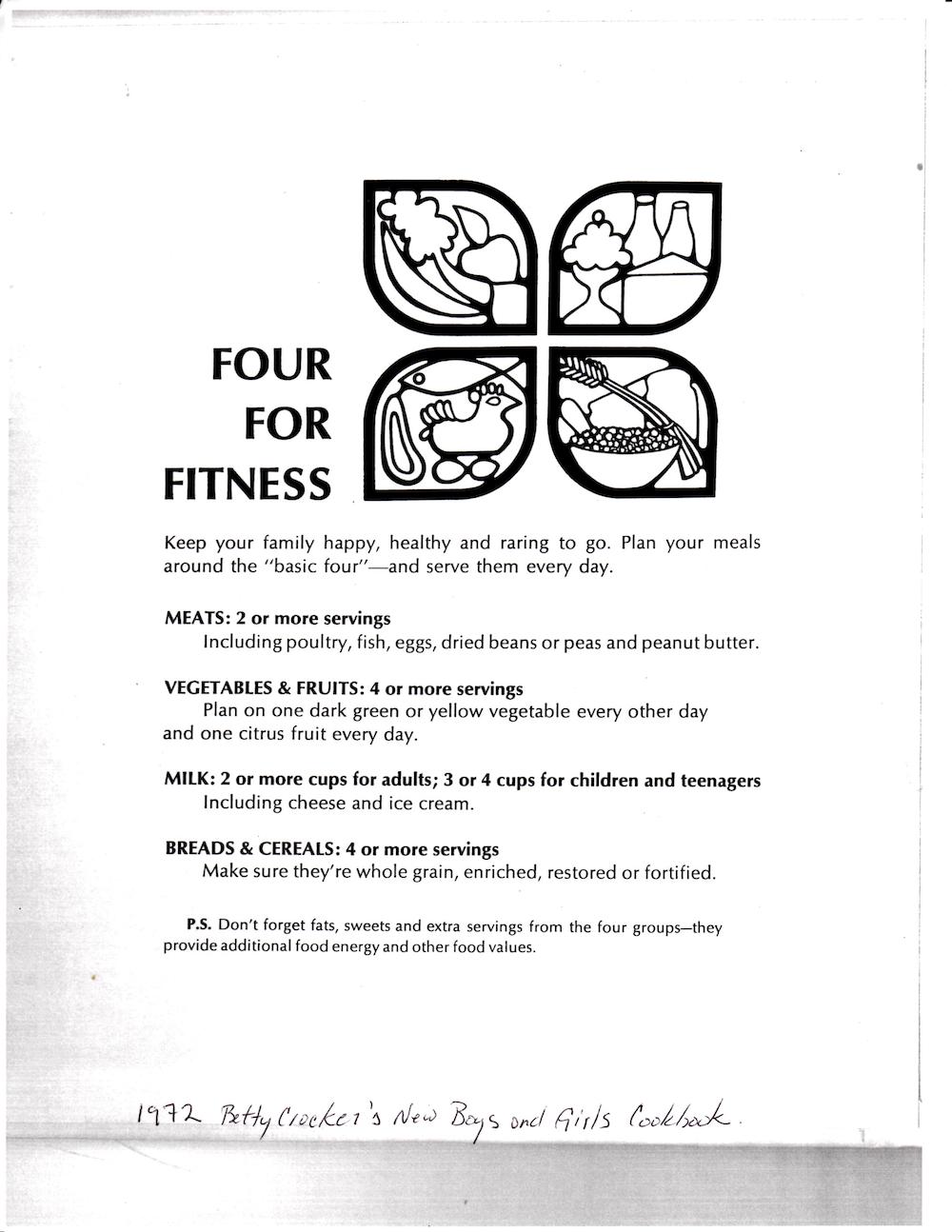
Four is an easy number to remember. And Four for Fitness has a lovely alliteration.

This from 1972 Betty Crocker New Boys and Girls Cookbook

1972 - four food groups - Betty Crocker New Boys and Girls Cookbook

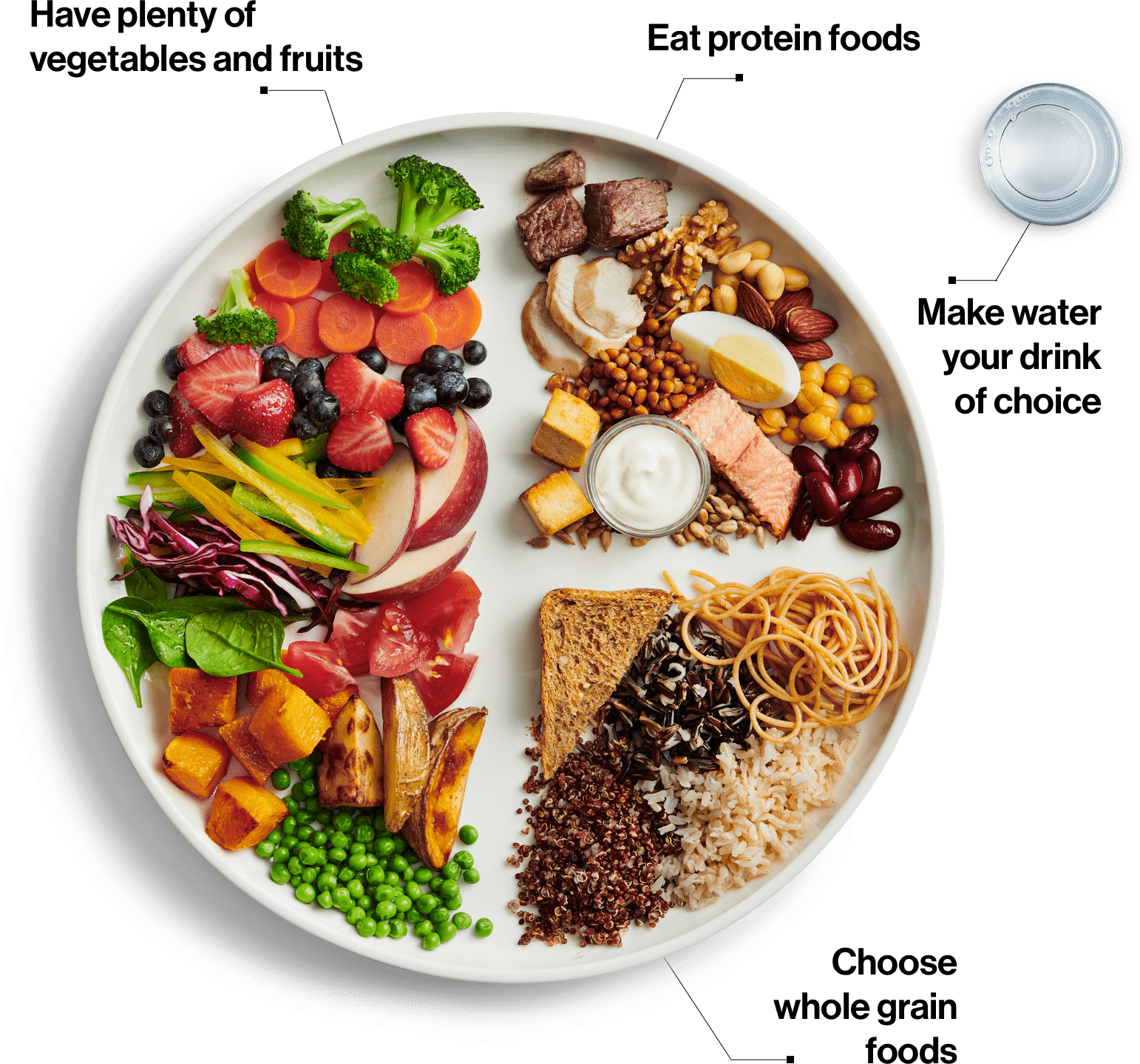
Compare with the current Canada Food Guide.

Notice how the Milk and Meat categories of yesteryear are now covered by the Protein category (much to the consternation of the dairy industry). The illustration of the Protein category shows a number of plant and animal sources and all that diversity only occupies a quarter of the plate (shrunk from half in years past).

The seeds were there in the past

1972 - four food groups - Betty Crocker New Boys and Girls Cookbook - close up on protein

Interesting to note that “meats” are glossed as “including poultry, fish, eggs, dried beans or peas and peanut butter.”

The standard advice is not too much and the variety of sources is spelled out in fine detail (The World Wide Web welcomes resources with extensive lists — an affordance not available to earlier formulators of food guides).

You don’t need to eat large amounts of protein foods to meet your nutritional needs. Try to eat protein foods such as:

  • eggs
  • lean meats and poultry
    • lean cuts of beef, pork and wild game
    • turkey
    • chicken
  • nuts and seeds
    • peanuts
    • almonds
    • cashews
    • nut butters
    • sunflower seeds
  • fish and shellfish
    • trout
    • shrimp
    • salmon
    • scallops
    • sardines
    • mackerel
  • lower fat dairy products
    • milk
    • yogurt
    • lower sodium cheeses
  • beans, peas and lentils
    • brown, green or red or other lentils
    • peas such as chickpeas and split peas
    • dried beans such as black beans and kidney beans
  • fortified soy beverages, tofu, soybeans and other soy products

And there is plenty of guidance on preparation of the foods.

Canada Food Guide Visual - English

And so for day 2546
02.12.2013

Posted in Food Writing | Leave a comment

petite pleasure

Lynne Huffer. Mad for Foucault: Rethinking the Foundations of Queer Theory p. 126

We queer Cartesians love our orgasms because they allow us to flirt with those errancies of the mind that we touch, ever so gently, in la petite mort. Still, I’ve always been struck that although people tune in to the mort part of the metaphor, it’s the petite dimension of it that’s important. The petite makes it liveable, pleasurable, repeatable. We may fantasize about an endless orgasm – or even a fifteen minute one. […] We toy with the idea of a grande mort, but we couldn’t really live it.

Because the petite mort is repeatable, its set of characteristics is also reversible: repeatable, pleasurable, liveable. Thus connectable.

And so for day 2545
01.12.2013

Posted in Uncategorized | Leave a comment

From Fear of Missing Out to Being Present

I like this direct attack. Puncturing the ballon with flair.

Here’s an insight that I’ve had about success: You can’t be successful at everything. We hear a lot of talk about work-life balance. Nonsense. You can’t have it all. You can’t. So any vision of success has to admit what it’s losing out on, where the element of loss is. And I think any wise life will accept, as I say, that there is going to be an element where we’re not succeeding.

Alain de Botton
TEDGlobal 2009
A kinder, gentler philosophy of success

I loved the appeal to the tragic to avoid the ridicule of the other. I loved the appeal to the medieval term “unfortunate” over the modern “loser”.

It would be insane to call Hamlet a loser. He is not a loser, though he has lost. And I think that is the message of tragedy to us, and why it’s so very, very important, I think.

That recognition of insanity is broached through humour – headlines ripped from the tabloids — and I laughed at their ridiculousness (which is not the same as ridiculing — nuance):

I mentioned Othello; they’d not heard of it but were fascinated.

I asked them to write a headline for the story. They came up with “Love-Crazed Immigrant Kills Senator’s Daughter.” Splashed across the headline. I gave them the plotline of Madame Bovary. Again, a book they were enchanted to discover. And they wrote “Shopaholic Adulteress Swallows Arsenic After Credit Fraud.”

And then my favorite — they really do have a kind of genius of their own, these guys — my favorite is Sophocles’ Oedipus the King: “Sex With Mum Was Blinding.”

“Incongruence” is not a word mentioned in the talk but it incapsulates well the attitude being purveyed.

An appreciation of incongruence – a worthy goal for a life well-lived. Dwelling in one’s own ridiculousness.

And so for day 2544
30.11.2013

Posted in Uncategorized | Tagged , , | Leave a comment

As the Crow Flies

Roger Deakin
Wildwood: A Journey Through Trees
“Cockatoo”

‘Suppose you couldn’t see a single tree. How would you find water?’ I asked Latz and Albrecht. ‘You would have to kill a wallaby or something, rub the meat with plenty of salt and stake it out. You can always find salt in the desert. Then you hide up and watch. Sooner or later a crow comes down and gorges itself on the salted meat. The salt makes it thirsty, so it flies off to the nearest waterhole. Crows always fly in a straight line. You follow, keeping to that line. Eventually you’ll find water.’

Latz is Peter Latz, the author of Bushfires and Bush Tucker: Aboriginal Plant Use in Central Australia.

And so for day 2543
29.11.2013

Posted in Reading | Leave a comment

F R A N C O I S [fʁɑ̃swa]

A visit to the coffee shop. I know they will get my order correct and I dread how they will mangle my name. We are not in Montréal where “François” would be quite common. I usually pronounce and spell (sometimes too quickly being mindful of the queue). Recently this tactic lead to the name coming out printed like a Hebrew prophet [Hosea?] — “osua” — made all the more plausible by the name of the till operator — Ari. Despite the mangled name, an eye-catching collision of sounds and letters, I did get what I ordered — a double espresso.

ephemera - name on a bill - osua - for francois

Interestingly “osua” leads to a Finnish verb which ironically means to hit a target.
https://en.wiktionary.org/wiki/osua

And so for day 2542
28.11.2013

Posted in Perception | Tagged , , | Leave a comment