What is Heard

Will Young
“Jealousy”
on the album Echoes

The lyrics I have seen reproduce the long languorous pauses with line breaks and spacing. They bring into high relief the relation between waiting and thinking.

And it feels like jealousy
And it feels like I can’t breathe
And I’m on, down on my knees
And it feels like jealousy.

I’m tired of waiting.

I’m tired of thinking.

And it feels like jealousy (hey)
And it feels like I can’t breathe (I can’t breathe)
And I’m on, down on my knees (oh)
And it feels like jealousy

Listen in at 1:89 there are more words with telling rests:

And all this
feeling
taking over
me

Right there after the tired of thinking and waiting, just before the iteration of the naming of jealousy. Could this be a case of Will Young: ‘I forget lyrics and start making them up’? Improvisation that laid down the track?

And so for day 2391
30.06.2013
Posted in Uncategorized | Leave a comment

From The View Towards

On the occasion of his turning 100, a piece appeared about Robert Blackburn, Chief Librarian, under whose leadership the card catalogue was converted to machine-readable form.

It ends with a fine sentiment:

His birthday wish? “Only that my work in all those covered-wagon days will continue to provide my successors with the flexibility and scope that are needed to command a great future.”

That is a classy legacy statement.

And so for day 2390
29.06.2013

Posted in Uncategorized | Leave a comment

Gross Domestic Product: Its Limitations

First the examples of what’s wrong:

If you were the GDP, your ideal citizen would be a compulsive gambler with cancer who’s going through a drawn-out divorce that he copes with by popping fistfuls of Prozac and going berserk on Black Friday. Environmental pollution even does double duty: One company makes a mint by cutting corners while another is paid to clean up the mess. By contrast, a century-old tree doesn’t count until you chop it down and sell it as lumber.

Now why (a wartime mentality):

To calculate the GDP, numerous data points have to be linked together and hundreds of wholly subjective choices made regarding what to count and what to ignore. In spite of this methodology, the GDP is never presented as anything less than hard science, whose fractional vacillations can make the difference between reelection and political annihilation. Yet this apparent precision is an illusion. The GDP is not a clearly defined object just waiting to measure an idea.

A great idea, admittedly. There’s no denying that GDP came in very handy during wartime, when the enemy was at the gates and a country’s very existence hinged on production, on churning out as many tanks, planes, bombs, and grenades as possible. During wartime, it’s perfectly reasonable to borrow from the future. During wartime, it makes sense to pollute the environment and go into debt. It can even be preferable to neglect your family, put your children to work on a production line, sacrifice your free time, and forget everything that makes life worth living.

Indeed, during wartime, there’s no metric quite as useful as the GDP.

Utopia for Realists: How We Can Build the Ideal World
Rutger Bregman

And so for day 2389
28.06.2013

Posted in Uncategorized | Tagged , | Leave a comment

Marks and the Marked

The lines lifted out from their surroundings in the poem could be about cutting and self harm.

Your lacerations tell the losing game
You play against a sickness past your cure.

They are about a preacher’s struggle and another type of damage:

What are we in the hands of the great God?
It was in vain you set up thorn and briar
In battle array against the fire
And treason crackling in your blood;
For the wild thorns grow tame
And will do nothing to oppose the flame;
Your lacerations tell the losing game
You play against a sickness past your cure.
How will the hands be strong? How will the heart endure?

Robert Lowell
Mr. Edwards and the Spider
The Kenyon Review, Winter 1946, Vol. VIII, No. 1

And so for day 2388
27.06.2013

Posted in Poetry | Leave a comment

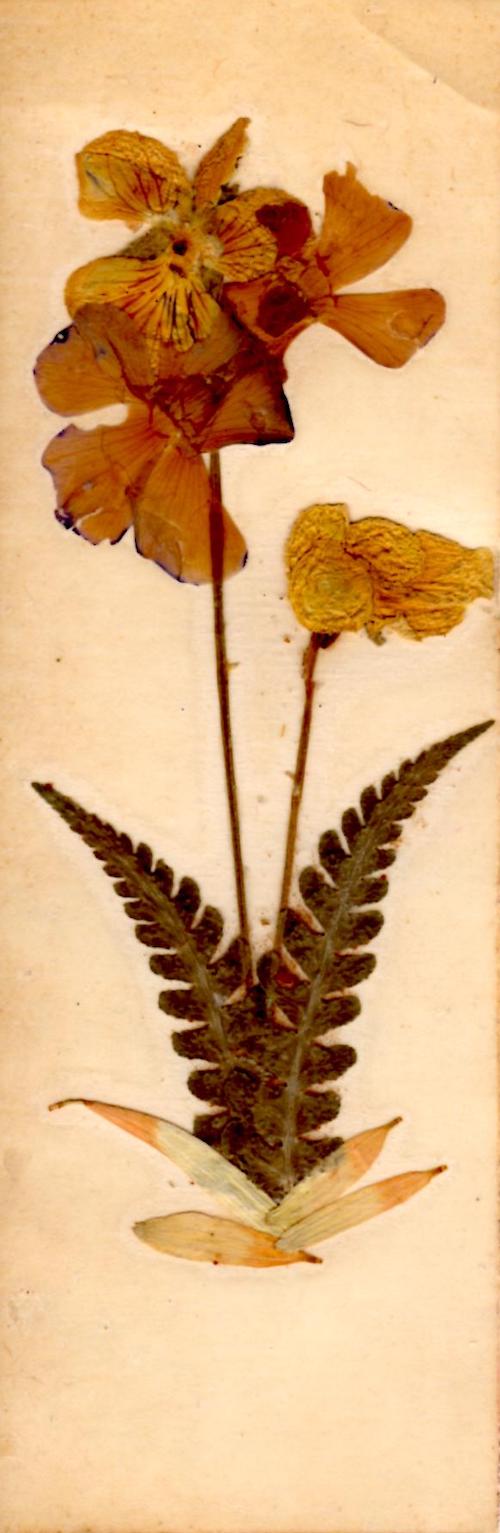
Viola Tricolor Memento

Browse: The World in Bookshops
Edited by Henry Hitchings

Reading in this collection “Bookshop Time” by Ali Smith, I was struck by this passage about what gets inserted and preserved between the pages of books

We leave ourselves in our books via this seeming detritus: cigarette cards with pictures of trees or wildlife; receipts for the chemist; opera or concert or theatre tickets; rail or tram or bus tickets from all the decades; photographs of places and long-gone dogs and cats and holidays; once even a photo of someone’s Cortina. Now when I donate books to the shop I have a flick through to make sure that anything tucked into them isn’t something I might mind losing.

A Cortina btw is a type of car.

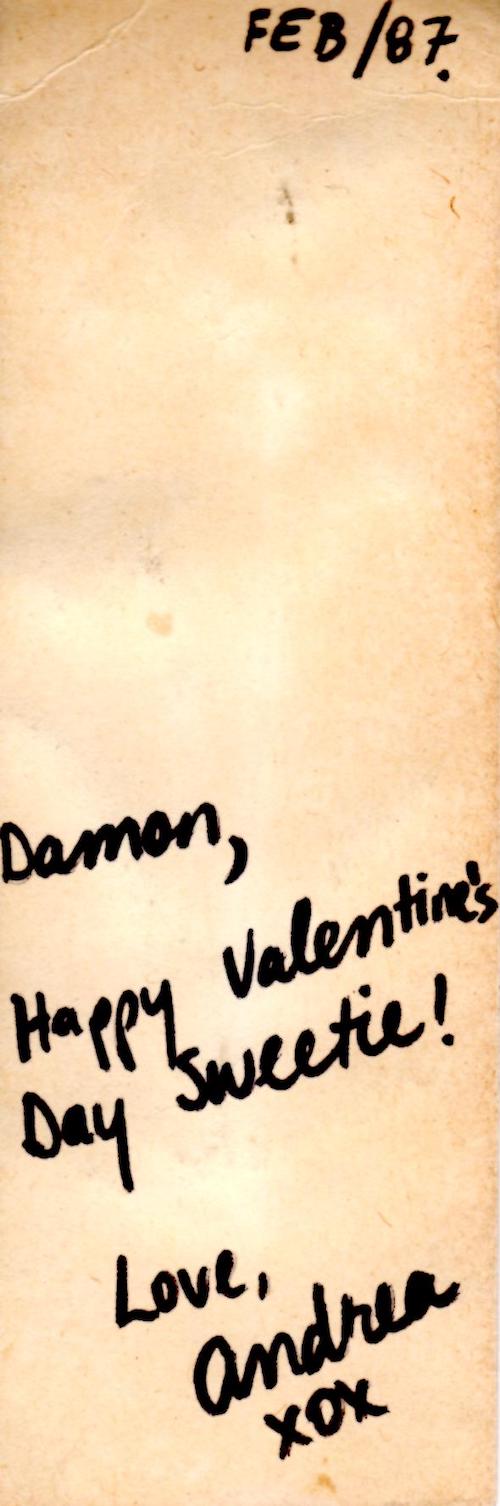
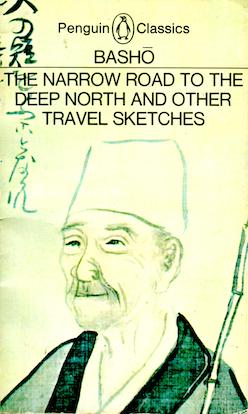
A few days later I find in a copy of Bashō a delicate book marker fashioned as a mark of affection and love. On the one side is a pressed heart’s ease patiently arranged and composed with parts from other plants to form a miniature herbarium specimen. On the other side is an inscription dated Valentine’s Day 1987. The card is laminated and so protected. A perfect long lasting gift.

ephemera - pressed flowerephemera - valentine's day bookmarked

cover - basho - narrow road to the deep north and other travel sketches

And so for day 2387
26.06.2013

Posted in Booklore, Ephemera | Leave a comment

drawn line has more than one direction

a drawn line has more than one direction

or so we are informed by

Mark Truscott “There” Branches

How many lines

in this glimpse

of bare tree?

[…]

drawn, a line can

never really move

in just one direction.

It gets complicated from there.

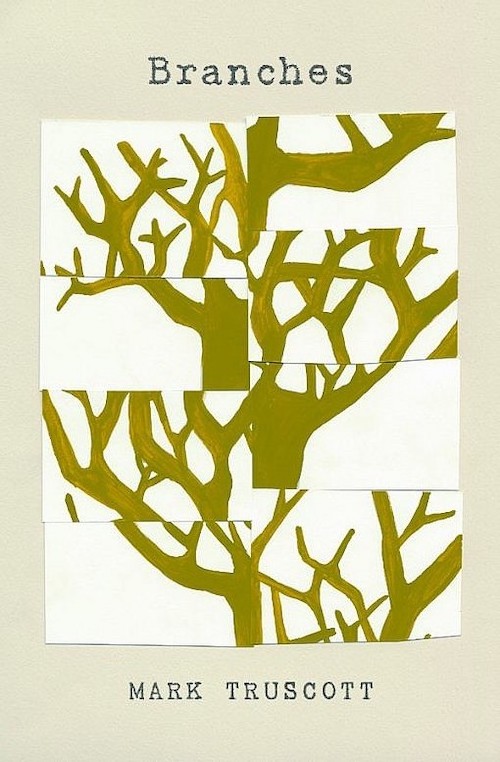
There is a great cover image — a puzzle piece image of a tree. Reproduced in grayscale in the inside covers: once completed or solved and once inverted. Roots. Routes.

In lieu of damaging the spine of my copy of the book by being flattened on a scanner bed, here is the cover designed by Tree Abraham and the cover flipped.

cover - mark truscott - branchescover flipped - mark truscott - branches

Detail counts in this book. The first line stands alone on the first page: “A branch like a line like a branch” is almost taken up verbatim on the second page “Branch like a line like a branch” — except a noun has been converted into a verb.

And so for day 2386
25.06.2013

Posted in Booklore, Poetry | Tagged | Leave a comment

Sensitivity to Setting

Jun’ichirō Tanizaki
In Praise of Shadows
Translated by Thomas J. Harper and Edward G. Seidensticker

On lacquer

First one coat…

And I realized then that only in dim half-light is the true beauty of Japanese lacquerware revealed. The rooms at the Waranjiya are about nine feet square, the size of a comfortable little tearoom, and the alcove pillars and ceilings glow with a faint smoky luster, dark even in the light of the lamp. But in the still dimmer light of the candle stand, as I gazed at the trays and bowls standing in the shadows cast by that flickering point of flame, I discovered in the gloss of this lacquerware a depth and richness like that of a still, dark pond, a beauty I had not before seen. It had not been mere chance, I realized that our ancestors, having discovered lacquer, had conceived such a fondness for objects finished in it.

Then another…

Sometimes a superb piece of black lacquerware, decorated perhaps with flecks of silver and gold — a box or a desk or a set of shelves — will seem to me unsettlingly garish and altogether vulgar. But render pitch black the void in which they stand, and light them not with the rays of the sun or electricity but rather a single lantern or candle: suddenly those garish objects turn somber, refined, dignified. Artisans of old, when they finished their works in lacquer and decorated them in sparkling patterns, must surely have had in mind dark rooms and sought to turn to good effect what feeble light there was. Their extravagant use of gold, too, I should imagine, came of understanding how it gleams forth from out of the darkness and reflects the lamplight.

… prose as carefully built up layer by layer as the objects it describes.

And so for day 2385
24.06.2013

Posted in Uncategorized | Leave a comment

Subduing the Imperatives

Comparing what I heard with what I read, I became aware of two versions of the song. A snippet for comparison…

Melanie Version

There’s no time to lose I heard her say
You gotta catch your dreams before they run away
Dying all the time
Lose your dreams and you might lose your mind
Is life unkind

Goodbye, Ruby Tuesday
Who is gonna hang a name on you
And when you change with every new day
Still I’m gonna miss you

Rolling Stones Version

“There’s no time to lose, ” I heard her say
Catch your dreams before they slip away
Dying all the time
Lose your dreams and you will lose your mind
Ain’t life unkind?

Goodbye Ruby Tuesday
Who could hang a name on you?
When you change with every new day
Still I’m gonna miss you

~~~

Slight but impactful differences … might … will

And so for day 2384
23.06.2013

Posted in Uncategorized | Leave a comment

Close-up on the Chocolate

Wallace Edwards
Alphabeasts

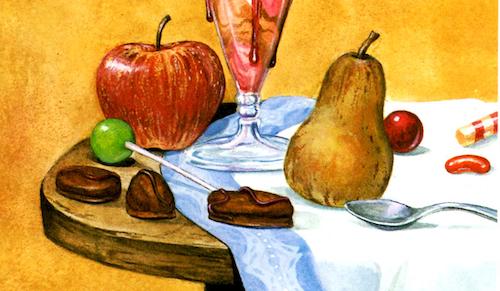
Truly captivating images of animals in action and simple verse that complements the images well. From which I have collected these bonbons…

close up - illustration of candy - alphabeasts - wallace edwards

close up - illustration of candy with fruit - alphabeasts - wallace edwards

There are also brushes dripping with paint that get repeated and fruit too.

And so for day 2383
22.06.2013

Posted in Uncategorized | Leave a comment

Accepting Ursula’s Point of View

Partition by way of modality…

I don’t believe in Darwin’s theory of evolution, I accept it. It isn’t a matter of faith, but of evidence.

The whole undertaking of science is to deal, as well as it can, with reality. The reality of actual things and events in time is subject to doubt, to hypothesis, to proof and disproof to acceptance and rejection — not to belief or disbelief.

Belief has its proper and powerful existence in the domains of magic, religion, fear, and hope.

Ursula K. Le Guin “Belief in Belief” in No Time to Spare.

And so for day 2382
21.06.2013

Posted in Uncategorized | Leave a comment