Garden Views

Joseph Addison
Spectator No. 63
[The forms of wit: an allegorical analysis]
edited by John Loftis

The essay outlines in a Spenser-like fashion the domain of the goddess of Falsehood and the minions of mixed wit to culminate at the essay’s end with the domains left behind. The essay culminates in what is a descriptive passage that could serve as the locus classicus of enumeration of the aspects of the English garden and countryside.

As at the rising of the sun the constellations grow thin and the stars go out one after another till the whole hemisphere is extinguished, such was the vanishing of the goddess, and not only of the goddess herself but of the whole army that attended her, which sympathized with their leader and shrunk into nothing in proportion as the goddess disappeared. At the same time the whole temple sunk, the fish betook themselves to the streams and the wild beasts to the woods, the fountains recovered their murmurs, the birds their voices, the trees their leaves, the flowers their scents, and the whole face of nature its true and genuine appearance. Though I still continued asleep, I fancied myself, as it were, awakened out of a dream when I saw this region of prodigies restored to woods and rivers, fields and meadows.

As Addison gives us sunrise on domestic empire, we do well to recall that plant collecting amassed in imperial expeditions provided the foundation.

The collection of plants, as indeed of other categories of exotica, was contingent upon wealth and leisure, and was motivated by curiosity, novelty, exoticism and rarity. Those who established notable gardens were royalty and aristocracy, merchants, bishops, people with independent incomes. The act of collecting was part of the commercial exchange with, and exploitation of, other cultures. It is not surprising therefore that the collection, study and depiction of plants in the sixteenth, seventeenth and eighteenth centuries was focused on Holland, Germany, northern France, and England — the great centres of trade and colonial power. Sometimes plants were traded as a commodity — as with the tulip during the great speculative mania of the 1630s — or they themselves became the currency of exchange between botanists and collectors. Images were also exchanged, or produced in one locale and sent to another to be reproduced in books, as in the eighteenth century many of [Georg Dionysus] Ehret‘s works were made in England and sent to Trew for publication in Nuremberg.

Gill Saunders. Picturing Plants: An Analytical History of Botanical Illustration

The bridge here is the importation of plant materials from the colonies as is as documented in The Planters of the English Landscape Garden: Botany, Trees, and the Georgics by Douglas C. Chambers.

And so for day 1442
24.11.2010
Posted in Gardens | Leave a comment

Cross Words

Wordplay is a documentary about the New York Times crossword puzzle setters and solvers. A little aghast. One of the talking heads claims that English is the greatest language.

Interested in comparing greatness by number of speakers? Check out the listing at ethnologue.com which gives the top languages with at least 50 million first-language speakers. And for rhetorical good measure is Latin a greater language than English? Consider A Story as Sharp as a Knife: The Classical Haida Mythtellers and Their World and Robert Bringhurst’s appeal that the work of Skaay and Ghandl ranks among the greatest literature of the world. On the dynamics of fame and literature see Encyclopedia of Fictional and Fantastic Languages entry for Samuel R. Delany’s Stars in My Pocket Like Grains of Sand, a novel that plays with cultural forgetting and memory. The Encyclopedia provides readers with a quick reference to the language and work of Vondramach Okk.

[J]ust as curious, is the “made-up” language of Vondramach Okk, a tyrannical matriarch who decided that “since nobody ever took the poetry of political leaders seriously, it didn’t matter what language she wrote it in”. The language of Okk’s poetry employs “both a phonetic and an ideographic writing system” and complex letters called “shiftrunes”. Shiftrunes represent a structured sequence of changing pronunciation, a writing technique that allows the poet to contrast visual and phonetic relations (Delany’s theme of difference sounds again in microcosm here). Okk’s works include the epics the Oneirokritika and the Energumenika and collections of lyrics such as Lyroks and Hermione at Buthrot. No samples of her poetry appear in the novel.

Focussing on the question of crosswords, Quora collects some interesting replies to the question: Is there a written language in which it is impossible to create crossword puzzles? If not, replace “impossible” with “really hard”.

And so for day 1441
23.11.2010

Posted in Uncategorized | Leave a comment

From Sulby Auto-Minabinda to Hand Sewn

I recall recording a few colophon quibbles with the folding and binding information in a book issued by Coach House Press.

Its pages were folded on a Baumfolder, gathered by hand, bound on a Sulby Auto-Minabinda and trimmed on a Polar single-knife cutter.

I thought such a statement was an ironic inflection of technicity. I have since looked for images of the machinery, even located a few videos. I was prompted by the colophon found in the publications of Short Stack Editions.

Many copies of this edition were hand sewn with baker’s twine by participants of YAI, a network of agencies that helps people with intellectual and developmental disabilities find work opportunities and receive job training. Learn more at yai.org

Sewn by : [name signed]

Having wrapped an elastic round a perfect binding rendered useless by dried glue and a crumbling spine, lends a greater appreciation for all the paper products that I handle whether bound, folded, clipped or stapled. Celebrate the technicians and their merry ways at the Waysgoose: they work hard to keep it together. In this vocation they are bound.

And so for day 1440
22.11.2010

Posted in Booklore | Leave a comment

Apprivoiser: to call a scan a facsimile

I recently found myself writing about the various versions of Archibald MacLeish’s “Ars Poetica” and described the Poetry Foundation’s digital image scan of the June 1926 Poetry magazine pages as a “facsimile”. I realize that is technically inaccurate — page size being the main factor that distinguishes a digital image viewed on screen from a print facsimile edition held in the hand. Still part of me wanted strongly to use the word “facsimile” to apply to the digital image. I am wondering if this were not an attempt to apprivoiser (tame) in the vein of Le Petit Prince.

– Non, dit le petit prince. Je cherche des amis. Qu’est-ce que signifie “apprivoiser” ?

– C’est une chose trop oubliée, dit le renard. Ca signifie “créer des liens…”

Creating new links using old words.

And so for day 1439
21.11.2010

Posted in Translations | Leave a comment

Cancellations and Blanks

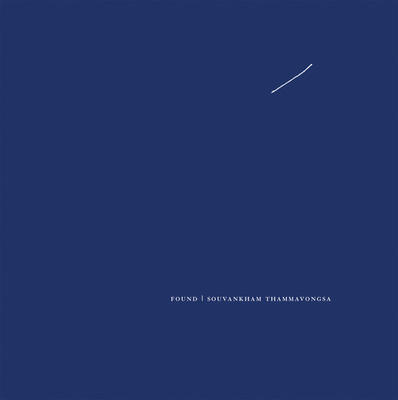
The paratext indicates a “scrapbook” but some of the entries/poems would indicate a “diary”. Found by Souvankham Thammavongsa.

Observe in the corner of the cover a simple diagonal line, almost decorative. But it is very declarative. It “takes out the month”.

cover - Found by Souvankham Thammavongsa

That very same graphic is found inside the book to mark time marked off for whatever reason. Months have the line drawn through. And there follow months that are blanks. A series of cancellations followed by blanks would lead one to believe that the recording had been abandoned. The effect of fading is almost perfect except that the series ends with a poem, “Warning”. However the poetic voice in this last poem is no longer describing the “scrapbook” but is recounting the actions of the father whose scrapbook has been mined for the book the reader holds in their hands.

Brittany Kraus reading the same paratext gloms onto the refugee status of the father (I, onto the fact that the “scrapbook” is thrown away) and from there frames the whole book as a waiting for.

Thus, the reader becomes a participant in the refugee’s experience of waiting—for a letter, for a visa, for permission to enter.

Unmarked, Undocumented and Un-Canadian: Examining Space in Souvankham Thammavongsa’s FOUND Postcolonial Text, Vol 10, No 2

But the final poem appears to have nothing to do with waiting but with warding off. Its principle image is of a gutted pigeon tossed back as a warning. What being found was not always there. And not always being there can be found elsewhere. No need to wait.

And so for day 1438
20.11.2010

Posted in Booklore, Poetry | Tagged | Leave a comment

Revisiting a Neighbour

Kim Kutner used to be a neighbour. A very pleasant neighbour she was. I am lucky to have some of her bookwork. I have discovered that she has since branched out to work in fabric. Some of her art is viewable at Kim’s Suitcase and in a Flicker stream.

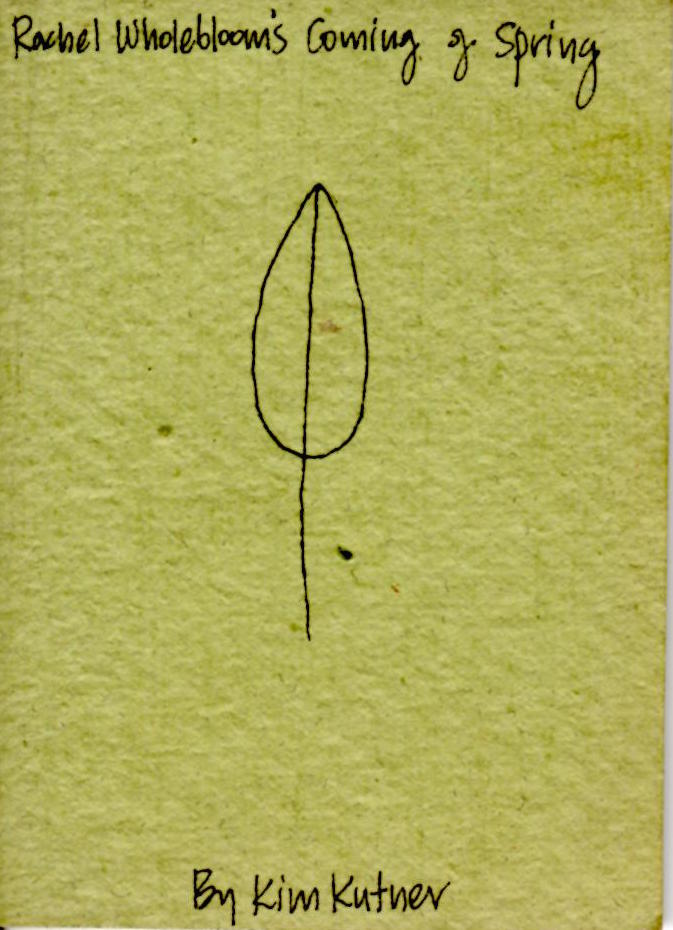
I still treasure a tiny book Rachel Wholebloom’s Coming of Spring (1995) It is hand lettered and stitched. It’s a gem.

cover Kim Kunter chapbook - Rachel Wholebloom's Coming of Spring

Kim Kunter chapbook – Rachel Wholebloom’s Coming of Spring

I am particularly fond of a particular page because of where the narrative focalization chooses to rest its gaze. It’s a unique perspective, there for just a moment, and the page turns and the story moves on and we are never to dwell upon “Rachel’s middle hair parting”. The image is exquisite because the reader is also parting with this instant of the story as the page turns.
[Rachel is in a video store. You, gentle reader, may remember those.]

She chose something she
had heard about, something
that looked familiar, something
advertised in an old newspaper
she had been rereading. She
took the video to the counter.
The clerk a man in his mid-
forties, smiled a gold toothy
smile as his eyes fell on
top of Rachel’s middle hair
parting.

There is something iconoclastic about this little book. Although there are illustrations, none depict our protagonist. We are left to imagine her. All through telling details are told and tiny pictures are shown: the rubber boots, the city bus ride, the toast, the video cassette, and of course the buds beginning to open. Like the coming of spring an image forms of Rachel Wholebloom.

I, in holding the book, remember a good neighbour and wish her well wherever she may now be — somewhere where springtime comes cutting a pretty caper.

And so for day 1437
19.11.2010

Posted in Booklore | Leave a comment

Lucent Lunacies

At the heart of stasis is repetition. À l’image-temps.

A poem should be motionless in time
As the moon climbs

[…]

A poem should be motionless in time
As the moon climbs

This is what having seen the loop of planes crashing into skyscrapers has revealed again — there is a standing still in the jetztzeit. For us, finding Benjamin’s notion in the repeated lines Archibald MacLeish‘s Ars Poetica.

How very interesting about the punctuation (or lack thereof). In the anthology The Imagist Poem edited by William Pratt, the lines quoted above from “Ars Poetica” have no punctuation marks at line ending. This for me lends more of the arresting effect when the identical lines are re-encountered in the reading. However, the Poetry Foundation serves a version from the Collected Poems 1917-1982 (copyright 1985) which version groups the stanza in sections and offers variant punctuation.

A poem should be motionless in time
As the moon climbs,

Leaving, as the moon releases
Twig by twig the night-entangled trees,

Leaving, as the moon behind the winter leaves,
Memory by memory the mind—

A poem should be motionless in time
As the moon climbs.

The Poetry Foundation also offers a facsimile of its publication in the June 1926 edition of Poetry magazine where the lines are punctuated differently (and no grouping of the stanzas) …

A poem should be motionless in time
As the moon climbs;

[…]

A poem should be motionless in time
As the moon climbs.

Pratt included in the Imagist anthology a version from Collected Poems by Archibald MacLeish 1917-1952 (copyright 1954).

So my stasis-as-repetition comment rests on but one version of a poem that exists in multiple versions. One tiny moment caught in the aperture of criticism.

And so for day 1436
18.11.2010

Posted in Booklore, Poetry | Leave a comment

C R Y S T A L

Roland Barthes
Empire of Signs
trans. Richard Howard

“The Interstice” is about food preparation (tempura) and makes reference to the Branch of Salzburg. Which is a reference to Stendhal on the crystallization of love.

In the summer of 1818 Stendhal took a recreational trip to the salt mines of Hallein near Salzburg with his friend and associate Madame Gherardi. Here they discovered the phenomenon of salt “crystallization” and used it as a metaphor for human relationships. “In the salt mines, nearing the end of the winter season, the miners will throw a leafless wintry bough into one of the abandoned workings. Two or three months later, through the effects of the waters saturated with salt which soak the bough and then let it dry as they recede, the miners find it covered with a shining deposit of crystals. The tiniest twigs no bigger than a tom-tit’s claw are encrusted with an infinity of little crystals scintillating and dazzling. The original little bough is no longer recognizable; it has become a child’s plaything very pretty to see. When the sun is shining and the air is perfectly dry the miners of Hallein seize the opportunity of offering these diamond-studded boughs to travellers preparing to go down to the mine.”
Stendhal (1822). On Love. New York: Penguin Books
https://en.wikipedia.org/wiki/Crystallization_(love)

A different selection from the Stendhal source, crystallized around the branch of a French Wikipedia article and with a link to an optical scan of a 1906 edition.

C’est dans le chapitre 2 de De l’amour, intitulé « De la naissance de l’amour », qu’il décrit les étapes par lesquelles l’amoureux pare l’être aimé de toutes les qualités, certaines imaginaires : « Aux mines de sel de Salzbourg, on jette dans les profondeurs abandonnées de la mine un rameau d’arbre effeuillé par l’hiver ; deux ou trois mois après, on le retire couvert de cristallisations brillantes (…) Ce que j’appelle cristallisation, c’est l’opération de l’esprit, qui tire de tout ce qui se présente la découverte que l’objet aimé a de nouvelles perfections »
http://gallica.bnf.fr/ark:/12148/bpt6k5550781f/f73.image

And so via Barthes and throwing a branch into the salt mines of the World Wide Web we capture the crystal of a reference to Gallica and its publicly-available treasures from the Bibliothèque nationale de France which into its search engine we throw “tempura” and become acquainted with the traces of French acquaintance with Japanese cuisine.

And so for day 1435
17.11.2010

Posted in Metaphor | Leave a comment

parseabilities

word image text – be mindful of the order

Matthew G. Kirschenbaum wrote (March 11, 2005) under the title “Being Read” a brief blog entry on the reviews to his “The Word as Image in an Age of Digital Reproduction” which has been published in Eloquent Images http://lte-projects.umd.edu/mgk/blog/archives/000762.html

In the comments I speculate…

It seems that in some fashion there is a lucid dream at work in the writing. It is a dream of parsing. A dream that unites the realms of production and reception, that plays with the fluid identities to which [Johanna] Drucker points. In the field of resistance and rapture that the electronic form of word, image, text, graphic engender, parseable pixels exist and are manipulable. But as in the classic dreamwork of Freudian psychoanalysis, the parseable pixel is neither a word nor an image yet it is inherently textual. The parseable pixel functions almost like computing’s unconscious. Almost like a hint of irreducible materiality as the other face of textuality. Almost at most.

only just struck me that dreams are parseable too

And so for day 1434
16.11.2010

Posted in Uncategorized | Leave a comment

Circling the Scan

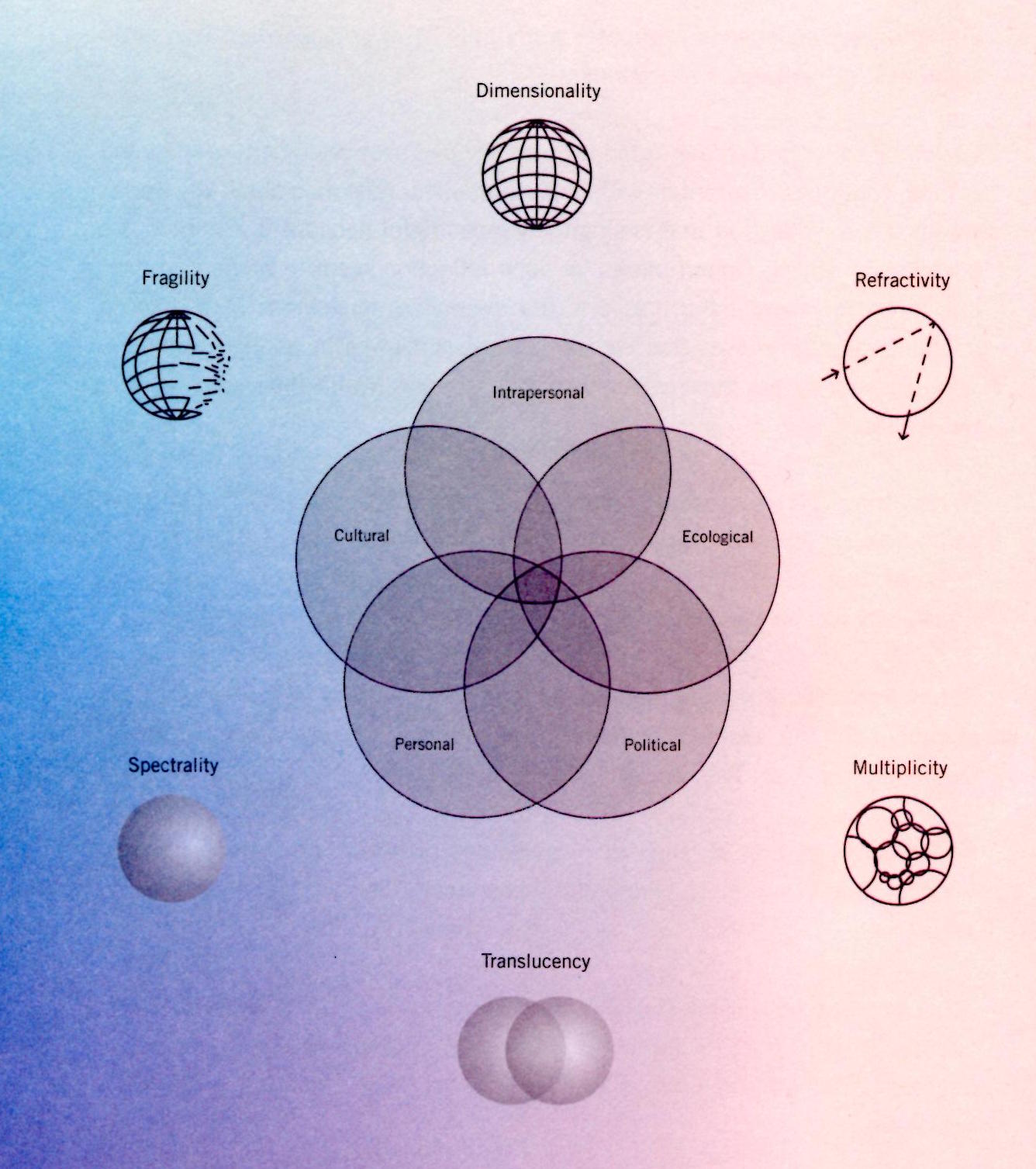
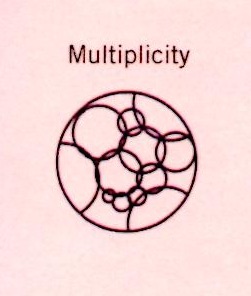
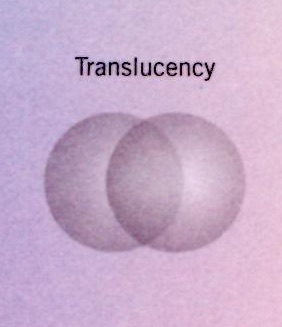
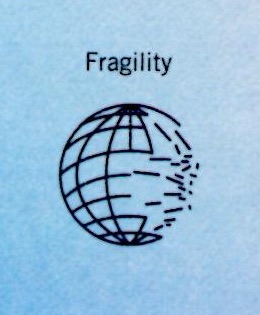
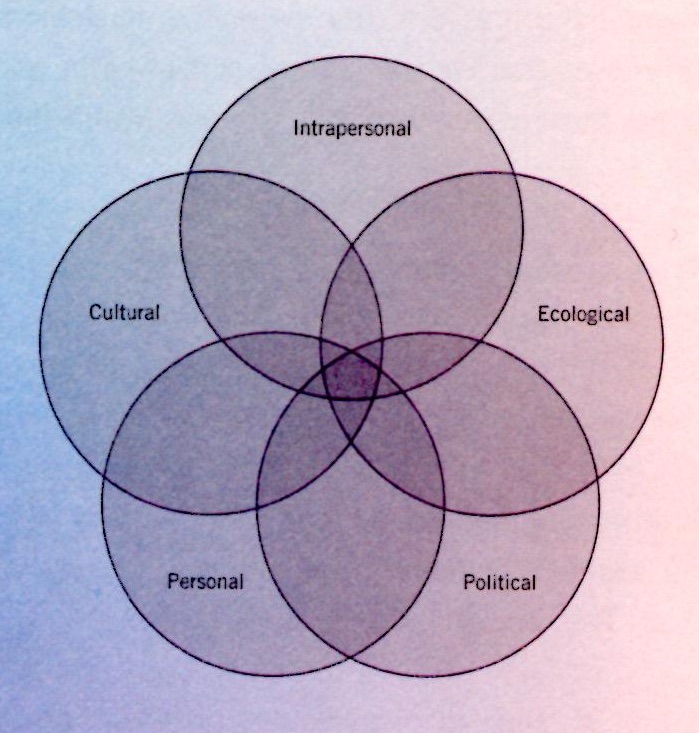
This intriguing illustration appeared in a booklet put out by Worldstage at Harbourfront Centre. The design reminds me of the organizational development charts that track the factors at play in good institutional interaction. This isn’t that.

It is almost unreadable on paper due to the colour bleed from blue to purple and from the selection of the type. Scanning however proves wonderful.

Here is the whole view.

Worldstage - Harbourfront - graphic

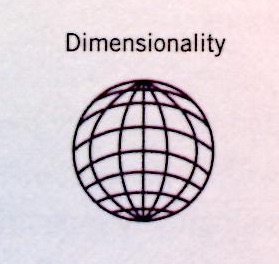
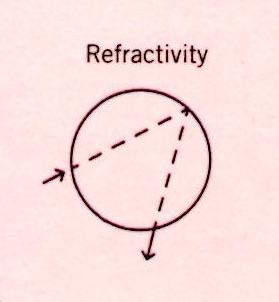
And now the elements orbiting the centre core.

world stage graphic - dimensionality Dimensionality
Refractivity world stage graphic - refractivity
world stage graphic - multiplicity Multiplicity
Translucency world stage graphic - translucency
world stage graphic - spectrality Spectrality
Fragility world stage graphic - fragility

And the core

world stage graphic - centre

Intrapersonal, Ecological, Political, Personal, Cultural

And so for day 1433
15.11.2010

Posted in Ephemera | Leave a comment